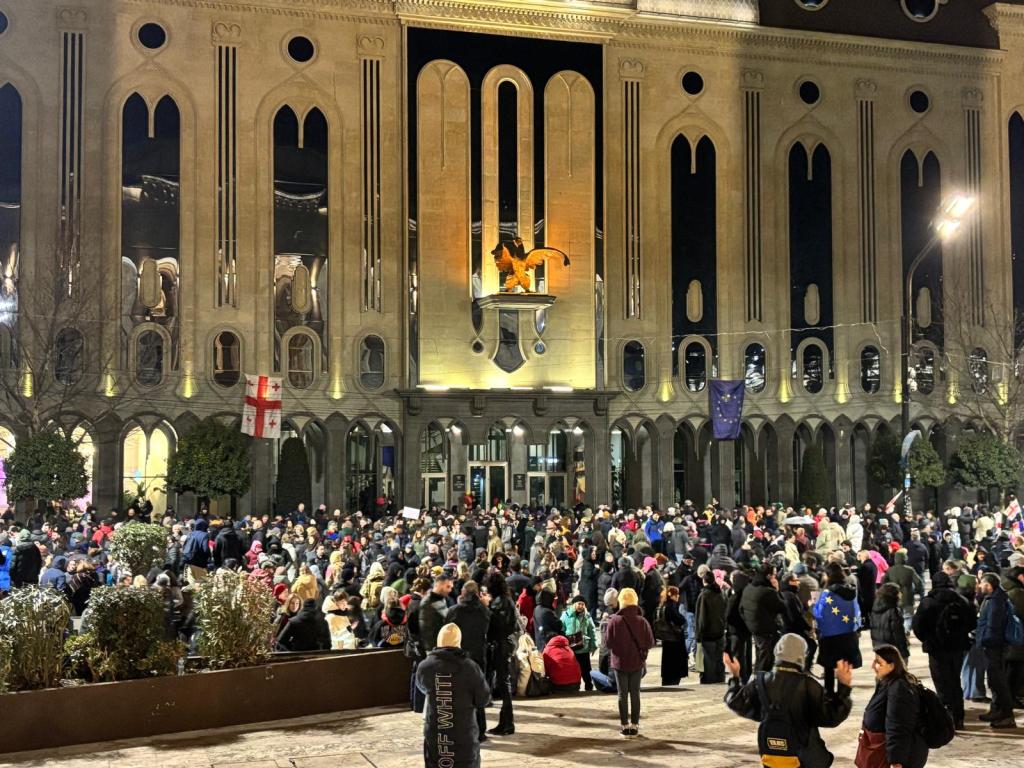
Some young protesters describe why for them and the vast majority of Georgians joining the EU means basic freedoms and more opportunities for their futures
TBILISI – “Now we are protesting not only the Russian regime, but for our rights, like basic rights as human beings, to not be beaten to death just because we want to be free.”
This is 20-year-old Mariam Balakhadze, from Tbilisi, a university student of at the first year of Theatre and Critics at Shota Rustaveli Theatre and Film University. She is one of the thousands of people from all age groups and backgrounds that every single day are attending mass protests in many town of Georgia.
From Batumi to Kutaisi and Gori, people are denouncing Georgia’s “stolen” elections. Since the introduction of the so called “Foreign Agent Law” in May 2024, and the suspension of negotiations to join the European Union, Georgia embarked upon an uninterrupted series of protests, of which this is the sixteenth week.
Weirdly enough, Russia is not included in the “Foreign Agent Law”.
On 13 February, European Parliament declared that the “self-proclaimed” government of the Georgian Dream party – founded and funded by the Russian linked billionaire Bidzina Ivanishvili – has no legitimacy, calling for the international community to push for new elections.
As part of the protests, Mariam and her fellow students occupied their university building for 83 days, from the 17 December 2024 until the 9 March. “Our plans are to still protest, but in different ways,” says Mariam.

In Tbilisi, hordes of people are still marching on parliament in Rustaveli Avenue every single evening.
The ruling party, however, is ramping up the crackdown. So far, peaceful protesters have been repressed with violence. Opposition leaders, journalists and students have been fiercely beaten in the streets by special police forces and anonymous squads of men wearing face masks.
Especially on Rustaveli Avenue, marked and unmarked police can be particularly brutal with harmless people.
“All these people were gathered together,” explains Mariam. “And as you know, the streets are quite narrow. Like, the parallel streets of Rustaveli Avenue, even this street is quite narrow for people to, you know, just to go through.
“And they were throwing gas capsules and those were exploding, and we couldn’t run quickly, because the streets are narrow. And people were pushing each other to run as fast as we could. And then, when we ran through all these narrow streets, the ‘special bodyguards’ were keeping up with you, and they were beating you.
“They were beating kids, women, guys, girls, like, all the ages, all the genders, like everyone. They were beating everyone that they saw.”
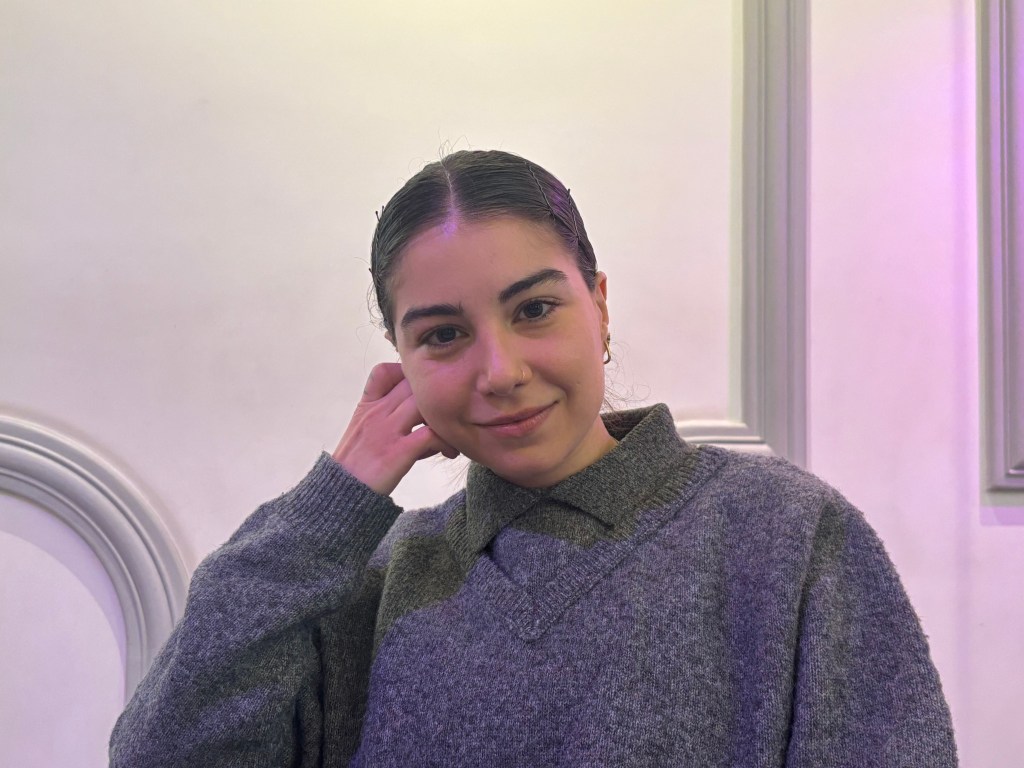
Tekla Targamadze, a 26 year old TV journalist from Tbilisi, said: “The situation is getting worse and worse each day.
Tekla, who this year was awarded the EU-funded prize ‘Solidarity Journalism for Inclusion’, works for Formula TV, one of the most prominent broadcasters criticising the regime.
“Freedom of press in Georgia is in its hardest time. Critical broadcasters and online media are pressed in every way possible. The non-legitimate government is trying its best to mute all the sources of critical voices. They haven’t been talking to the critical journalists already for years; they only communicate with the media [channels] which spread their propaganda.
“During these last protests, a lot of journalists were [severely] physically injured, but none of this cases have been investigated. Seventeen journalists have been fined with 5000 Gel (1800$) for blocking the streets during protests, while they were just doing their job.
“Seventeen journalists have been fined with 5000 Gel (1800$) for blocking the streets during protests, while they were just doing their job.
“No one feels safe while working,” confess Tekla. “When you are working at the protest, you know that if something happens, you will be the target. We are already used to be bullied and insulted, but the physical threat has became too high.”
When asked if to join the European Union would make the difference, Tekla didn’t have any doubts.
“EU for me is freedom, in one word,” said Tekla. “Georgia is truly Europe with its soul, culture, traditions and everything. We have been fighting for becoming part of the EU for decades and we hope we will come to the end of this long journey. It is very hard to speak from the point of view of a journalist, because I always speak about joining EU from the perspective of an average Georgian.
“Georgians cannot live under the Russian influence, the history has shown it already many times. EU has been our choice since forever and now is the final battle I believe.
“If something won’t change for the better, we will be over. It is our main goal and we hope we will succeed.
“Georgia is a warrior country. We have been fighting against Russia already for centuries and we got used to it. Now Russia is fighting against us with the hands of our so called ‘government’. We may fall sometimes, but every time we get back stronger.
“We cannot let ourselves stop because of fear. We are trying to do the best for Georgia’s future, which of course is our collective future. Our people’s lives, which were taken by Russia’s hands, cannot be forgotten nor forgiven. This is our country, they have nothing to do here.”
Speaking to the 21-year-old Ekaterina Goglidze, the impression that Georgian people – or at least thousands of them – are fighting against a Russian-puppet government in order to protect their basic rights and become part of the EU, cannot be ignored.
“Joining the European Union would help Georgia to secure the democratic and the stable future aligned with its longstanding aspirations to be part of the European family,”, says Ekaterina, student at the first year of Cinematography at Shota Rustaveli Theatre and Film University. Together with Mariam, she took part to the occupation of the university building.
“Also because we have a neighbour aggressor, the Russian state, that everyone knows it’s a terrorist.”
 Federica Adriani